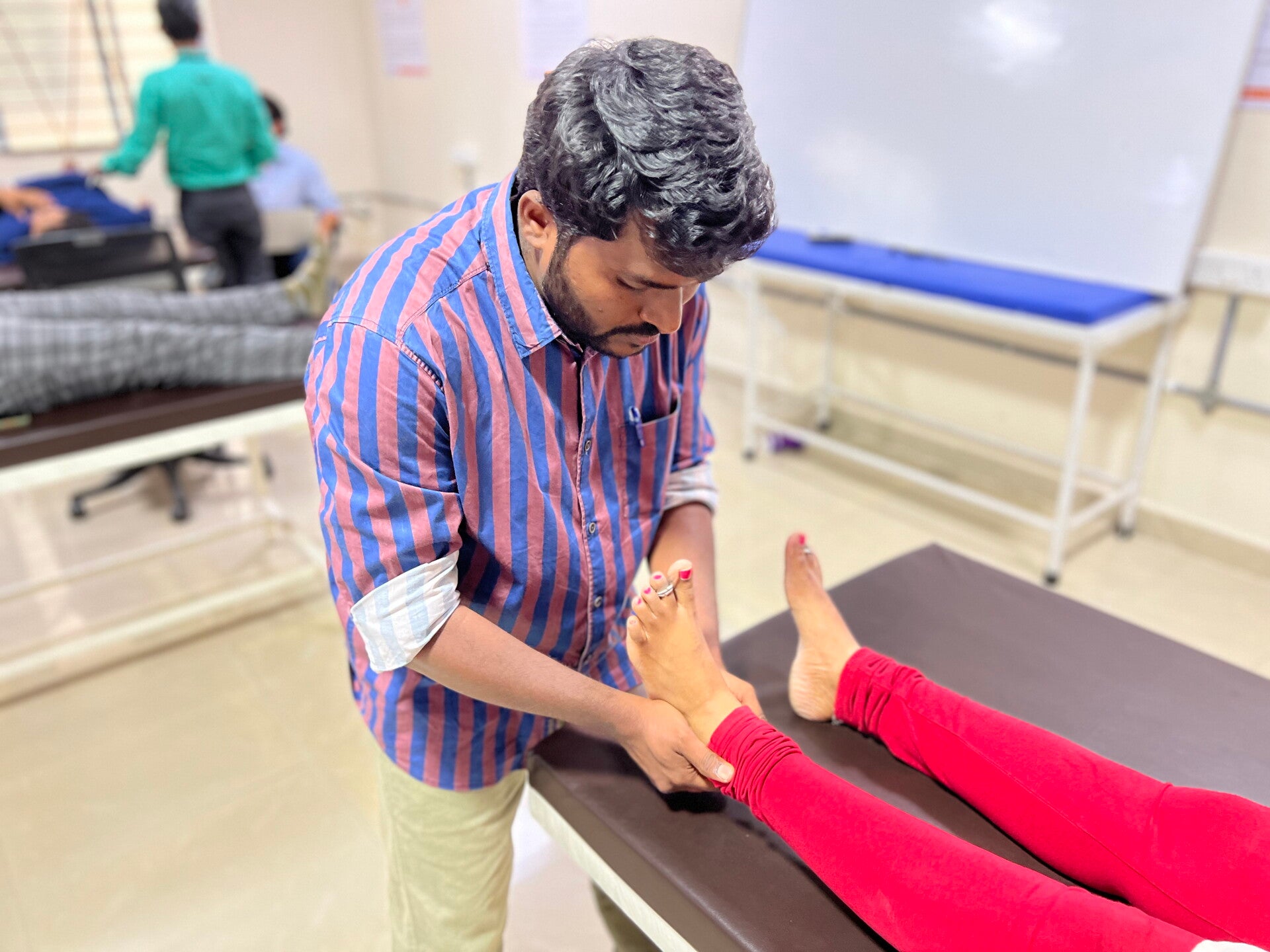
The Reaset Approach is a therapeutic methodology and hands-on treatment modality designed to integrate autonomic regulation into manual therapy, to address the changing causes of health problems and the effects of chronic stress on patients health and wellbeing. When integrated into existing clinical practice it provides manual therapists with a clear, practice-based and scientifically grounded framework to restore autonomic balance prior to symptom treatment and so enhance therapeutic effectiveness, supporting both physical and mental health and overall wellbeing.

In today’s rapidly changing world, the nature of health challenges has undergone a profound shift compared to the 20th-century paradigm. Historically, somatic dysfunctions were predominantly attributed to external physical forces – primarily biomechanical stressors – leading to structural or functional impairments. However, in the 21st century, the landscape of dysfunction has transformed. Present-day somatic complaints, including musculoskeletal disorders (MSDs), are increasingly linked to psychosocial pressures and adaptive stress responses, rather than direct biomechanical trauma. These conditions are rarely stand-alone and often reflect deeper systemic imbalances.

Although the somatic symptoms that bring patients to a manual therapist may resemble those of the past, the underlying mechanisms have changed significantly. In today’s digitised and fast-paced society, dysfunction often originates not from physical insult but from dysregulation within the extended autonomic regulatory system (EARS). This dysregulation – referred to as the autonomic dysfunction or lesion – represents a functional disturbance in stress-response systems, which can manifest as pain, fatigue, or other dis-ease states through direct and indirect pathways.

Traditional treatment approaches, designed to address somatic dysfunctions resulting from physical trauma, are often misapplied to cases where the root cause lies in psychosocial stress and autonomic imbalances. As a result, these interventions may yield limited or even counterproductive outcomes.

Amidst this evolving healthcare reality, The Reaset Approach emerges as a timely therapeutic methodology and hands-on treatment modality that can be integrated into any manual therapy practice to meet the growing need for interventions that align with current autonomic cause of dysfunction. It equips manual therapists with the means to address autonomic imbalances as a primary cause or as a symptom itself.

Beyond musculoskeletal health, autonomic regulation with The Reaset Approach holds potential across a wide range of clinical and therapeutic settings. It can support emotional regulation in psychotherapy, enhance recovery and stability before and after surgical procedures, increase the tolerance and effectiveness of cancer treatments, and improve responsiveness to medication. It also provides a valuable foundation for longevity and healthgevity work, because long-term healthspan depends not only on interventions, but on the body’s capacity to regulate, recover, and adapt.

A further benefit of restoring autonomic balance is that patients often experience not only improved physical outcomes, but also enhanced quality of life. In many cases, regulation isn’t just beneficial – it’s essential. Healing, whether physical or psychological, cannot occur without a regulated extended autonomic regulatory system.

Tom Meyers - Osteopath D.O., MSc. Ost. OSD

Fitfull Future Explorer

Founder and International Instructor of The Reaset Approach

Become Part of the Future of Manual Therapy

Tom Meyers Osteopath and Founder of The Reaset Approach.  Bruingin gautonomic regulation into manual therapy

Autonomic Regulation

The Reaset Approach

3-Day Int. Workshop

Tom Meyers Osteopath Brussels specialised in stress related dysautonomia

The Reaset Approach

Course Information

Organisation Information

Tom Meyers The Best Osteopath in Brussels specialised in stress related musculoskeletal, multimodal and mental healthdisorders

Osteopathy

Consultations

Patients

Expert Keynotes

In-House & Online

Information

WHAT IS AUTONOMIC REASETTING?

Autonomic Reasetting is the process of restoring balance within the Extended Autonomic Regulatory System (EARS) – the foundational system governing physical, psychological, and behavioural health. EARS comprises the Central Autonomic Network (CAN), the neuroendocrine system, and the immune–inflammatory system, which together regulate the body’s adaptive response to stressors. Many stress-related health conditions, often described as autonomic dysfunction or dysautonomia, arise from deeper dysregulation across EARS. Rebalancing EARS establishes the groundwork for therapeutic, biomechanical, psychological, or medical interventions, enabling faster and more sustainable outcomes in clinical practice.
 

WHAT IS THE REASET APPROACH?

The Reaset Approach is not an alternative or complementary therapy – it is an integrative methodology and hands-on treatment modality developed to integrate autonomic regulation into manual therapy. It is not an approach that stands on its own, but is purposely designed to be embedded within mainly physiotherapy, and osteopathy as the missing regulation-first framework needed in today's changing healthcare landscape.

Unlike techniques that can be extracted and applied in isolation, The Reaset Approach is an indivisible protocol. Its effectiveness lies in the coherent sequence of its modalities, which together establish a regulated state in which the body regains its capacity to adapt, repair, and respond to treatment.

By addressing the chronic autonomic imbalances underlying many of today’s health challenges – from musculoskeletal complaints to burnout, long-COVID, and other complex, multimodal conditions – The Reaset Approach introduces the missing regulatory link that conventional treatments overlook. In doing so, it resolves one of the key reasons why so many interventions fail to achieve lasting results. This regulation-first integration amplifies the effectiveness of biomechanical, psychological, and medical interventions, enabling faster, more sustainable outcomes and equipping practitioners for the realities of 21st-century healthcare.


3-DAY COURSE AGENDA

DAY 1 INCLUDES:

  • Sort history and evolution of ”The Reaset Approach”;
  • Understanding it’s significance of Autonomic Reasetting in A fast-changing world;
  • Tuning in exercice;
  • Introduction to the core and guiding principle underlying the ”The Reaset Approach”;
  • Demo + practical reaset of the neurocranium: Occiput-C1;
  • Demo + practical reaset of the neurocranium: Mastoid, Sphenoid;
  • Demo + Demo + practical reaset of the viscerocranium;
  • Demo + practical reaset of the neurocranium: Occiput ∼ Frontal, D2-C2
  • Questions & Answers (Q&A) + Intro Day 2. 


DAY 2 INCLUDES:

  • Questions & Answers (Q&A) + Intro Day 2
  • Reaset Yourself exercise;
  • Introduction the stress response: from stress to stressors, distinguishing autonomic dysfunction from autonomic lesions, and exploring stress-related dysautonomia.
  • Introduction to the myodural bridge and it’s suspected role in dysautonomia;
  • Rehearsal reaset of the neurocranium and  viscerocranium;
  • Demo + practical reaset of the Upper Limb;
  • Demo + practical reaset of the thorax;
  • Demo + practical reaset of the hip and psoas;
  • Demo + practical reaset of the sacrum - lumbar area
  • Questions & Answers (Q&A).


DAY 3 INCLUDES:

  • Questions & Answers (Q&A) + Intro Day 3;
  • Reaset Yourself exercise;
  • Summary therapeutic methodology of The Reaset Approach;
  • Introduction "Autonomic Asymmetry";
  • Rehearsal of Practical Day 1 and 2;
  • Demo + practical reaset (LVLA- decompression) of the upper back and sacro-lumbar area
  • Demo + practical reaset of the abdominal diaphragm; 
  • Questions & Answers (Q&A).
  • Certification
 

WHAT MAKES THE REASET APPROACH (R)EVOLUTIONARY?

What Makes The Reaset Approach (R)evolutionary?

Traditional biomechanical structure-function treatment frameworks often fail to address stress-induced autonomic dysfunctions that affect both the body and mind. Developed (from 2007) by Tom Meyers, Osteopath D.O., MSc. Ost., The Reaset Approach is the first body-centred treatment of its kind to introduce and integrate autonomic regulation into the biomechanical model.

In today’s fast-changing world, chronic stress-induced musculoskeletal pain has become one of the most significant health concerns, far surpassing direct physical trauma as the primary reason patients seek care. While classical biomechanical treatment methods remain effective for conditions with a clear biomechanical origin, they often fall short in cases where stress-related dysautonomia contributes to a.o. musculoskeletal disorders (MSDs) due to a “treatment mismatch” and the chosen therapeutic approach does not align with the underlying autonomic dysregulation and primary cause of a patient’s condition, resulting in ineffective or suboptimal outcomes.

WHY IS THE REASET A BODY-MIND APPROACH?

Bridging the Gap Between Physical and Mental Health

The Reaset Approach is one of the first body-centred treatment methods to extend manual therapy into the domain of psychotherapy. Traditionally, psychological conditions have been treated through psychological or behavioural therapy, while physical ailments have been addressed through direct interventions on the body. However, many mental health conditions today – such as stress, anxiety, mood disorders, cognitive decline, and depression – are not psychological but biological in origin. 

In other words, a rising number of mental health issues are stress-related, with dysregulation of one or more aspects of the extended autonomic regulatory system (EARS), which includes the central autonomic network (CAN), the autonomic nervous system (ANS), the neuroendocrine system (NE-S), and immune inflammatory system (IIS) – just as in MSDs – as the primary factor. Stress-related mental health disorders often coincide with MSDs and other seemingly unrelated ailments, creating a complex interplay between mental and physical health. By restoring autonomic balance, The Reaset Approach directly and indirectly addresses the physiological imbalances that drive both stress-related mental health problems and their associated physical symptoms, often leading to remarkable improvements after just one consultation.


WHAT ARE THE BENEFITS FOR MT's

In today’s fast-changing and challenging world, many musculoskeletal health problems that bring patients to seek help no longer stem from physical trauma (accidents, falls, etc.) but rather from chronic stress, which deregulates the ANS. This stress-related dysautonomia can further develop into an autonomic lesion, leading to multimodal health problems with symptoms that often seem to appear overnight.

Without restoring autonomic balance first, any attempt to alleviate pain or treat symptoms by simply correcting structure and function through traditional biomechanical methods will fail to produce lasting results. It’s like trying to reset a tripped fuse breaker by flipping it back to the “On” position without first fixing the overloaded circuit – it simply won’t work.

The Reaset Approach resolves this issue by targeting the autonomic imbalance/lesion first, restoring autonomic regulation before addressing the somatic lesion/dysfunction.


WHY DOES ATTENDING THIS COURSE MATTERS?

As a PT you will

  • Learn directly from the founder and gain exclusive insights from Tom Meyers, whose decades of experience and pioneering work in autonomic regulation are redefining manual therapy.
  • Gain a unique perspective on today’s and tomorrow’s health challenges – This course provides a comprehensive understanding of the rising stress-related health problems of the present and future, offering insights they won’t find anywhere else.
  • Master a complete body-centred treatment modality that you will immediately be able to apply seamlessly in your practice, ensuring you can integrate and have better results from day one.


THE REASET APPROACH IN LONGEVITY CLINICS

New insights suggest that The Reaset Approach can provide a foundational layer for effective longevity and healthgevity clinics – not as a replacement for diagnostics or interventions, but as the regulatory “readiness” that helps them deliver. Many longevity strategies are scientifically promising, yet their real-world impact can be reduced when patients operate in chronic autonomic imbalance – especially when stress-related dysautonomia, or an “autonomic lesion”, has developed and adaptive capacity is compromised. By prioritising autonomic reasetting first, The Reaset Approach helps prime the system to respond: it may improve treatment tolerance and uptake, support recovery and resilience, and reduce stress-related drivers associated with biological ageing (including metabolic, immune, and neuroendocrine disruption). In doing so, it increases the likelihood that advanced diagnostics, lifestyle protocols, and longevity therapies translate into tangible, sustainable healthspan gains

the reaset approach - the foundation of successful healthgevity management.pdf


MEDIA

Thank you so much Respected Sir – Tom Meyers the 3-day course was very insightful, offering valuable perspectives and practical knowledge of The Reaset approach.The atmosphere encouraged learning, engagement, and meaningful interaction among colleagues. To the organising team-thank you for your seamless coordination and attention to detail. From the smooth registration process to the well-structured sessions and supportive environment


Dr Kuntal Jadav PT

Thank you Dr.Vinayak Dendge Sir for organising practical oriented workshop. l found Tom Meyers Sir  very knowledgeable and motivational. In no-time he has covered whole concept with sufficient supervised practice sessions for participants, rectified errors. He has made participants comfortable environment and solved all doubts endlessly.Thanks Tom Meyers Sir for sharing your valuable time and knowledge. Looking forward learn from you in future too. The arrangements at venue were wonderful and food was delicious. The workshop started on time and ended on time..Thanks again for both Dr. Tom Meyers sir & Dr Vinayak sir for giving us an Educational feast.


Dr. Chandrakant Patil PT


I have been practising The Reaset Approach for the last three months, and I am experiencing wonderful results – both in my patients and in myself. The biggest difference I notice compared to my earlier practice is that now I am able to close almost 90% of cases with positive outcomes. With the help of The Reaset Approach, I can address multiple symptoms in a much shorter time. 

This approach has not only transformed my clinical practice but also my mindset and interactions with society, colleagues, and patients. I now find myself more positive, mindful, and interactive in every situation. A genuine smile has become a constant part of me, and things are moving in a much more harmonious way. My patients are happier and more satisfied than ever before. Truly, The Reaset Approach is a life-changing method – for both the patient and the therapist.

Thank you so much, Tom, for teaching me this.


Dr Mahesh Sahu PT


About the Founder

Tom Meyers, D.O., MSc. Ost., is a Brussels-based osteopath, international speaker, and Futurist Futures Explorer working at the intersection of health, human adaptation, and the future of humanity in a fast-changing world.

With over two decades of clinical experience specialising in stress-related disorders, Tom combines body-centred autonomic regulation with futures thinking to address a defining challenge of our time – how humans can flourish and thrive in a world where biology and culture collide.

He is the founder of The Reaset Approach, integrating autonomic regulation in manual therapy for more effective therapeutic outcomes and more resilience, healthspan, and lifespan.

Tom is also the author of Futurize Yourself and The Futures Effect, and a sought-after educator and keynote speaker delivering lectures and workshops worldwide. He is a board member of Verenigde Osteopaten (Belgium), a member of the Association of Professional Futurists, and the Belgian Ambassador for Healthgevity Nation.


His work has been recognised with the GHP Holistic Health Awards – Health & Wellbeing Innovator of the Year 2026 (Europe).

AGENDA

DELHI

2-4 October 2026

Organised by: Pillai Human Society - Dr Narkeesh

Organiser: Dr. Sharan Kaur PT: +91 85568 96753

Fee: 35.000₹ (30k for candidates who have done MSc.osteopathy)

Course Location: t.b.c

PHILIPPINES - MANILA: 24 - 26 July 2026 (t.b.c.)

Fill in the form via the link below to receive updates on upcoming courses.

GENT

T.B.C

Korenlei 22 - 9000 Gent

Organisatie: Osteopaat Vlaanderen - The Practice Academy

BLOG

Autonomic Modulation vs Autonomic Regulation

In manual therapy, interest in autonomic regulation is growing rapidly. We increasingly see studies reporting changes in heart rate variability, heart rate, blood pressure, respiration, skin conductance, cortisol, inflammatory markers or subjective relaxation following therapeutic interventions. These findings are important, but they also create a terminology problem. A measurable physiological change does not necessarily mean that regulation has improved. If we want to investigate autonomic regulation scientifically, particularly from the perspective of the Extended Autonomic Regulatory System (EARS), we need to distinguish much more clearly between autonomic state, modulation, reactivity, recovery, regulatory function and regulatory capacity.

Read more »

The Vagus Nerve "Reset" Myth vs Reality

Scroll through your social media feed for more than a few minutes and you will inevitably encounter the viral siren song of the Vagus nerve "reset." From ice baths and targeted neck massages to rhythmic humming and expensive wearable gadgets, influencers and self-proclaimed health gurus promote these techniques as a biological panacea. In a culture defined by chronic overextension, the promise of a "magic button" to instantly dissolve anxiety, inflammation, and exhaustion is incredibly seductive. But behind the sleek aesthetic of the Vagus revolution, a troubling clinical reality is emerging: for many, these "hacks" aren't just failing – they are actively making things worse.

Read more »

By 2050, One in Three MSDs Will Be Non-Traumatic

When we talk about musculoskeletal disorders (MSDs), most people think of well-known conditions such as low back pain, neck pain, osteoarthritis, rheumatoid arthritis, and gout. In global epidemiology, these make up the “big five” MSD categories in the Global Burden of Disease (GBD) framework.

Read more »

Making Regulation Explicit in Osteopathy and Beyond

Since its inception, osteopathy has positioned itself as a treatment guided by reason rather than rule – focusing not on suppressing symptoms but on identifying and addressing the underlying cause of disease. Developed by Dr Andrew Taylor Still in the late 19th century, the profession emerged as a drug-free, hands-on approach to health, grounded in the belief that the body possesses inherent structural and physiological capacities for self-regulation and healing.

Read more »

Mr. Reaset is the musical identity of Tom Meyers, Osteopath D.O. MSc. Ost., author, Fitfull Futures Explorer, and founder of The Reaset Approach. Blending scientific insight with rhythm and reflection, Mr. Reaset creates educational music that brings his articles and ideas on the future of health and wellbeing—exploring themes such as stress, the autonomic nervous system, and somatic dysfunction—into engaging, memorable experiences. His debut track is, to his knowledge, the first-ever song based on a scientific article—his own—exploring autonomic asymmetry and body-brain dynamics, opening a new chapter in health literacy through music

Email: futurizeyourself@gmail.com

Website: www.thereasetapproach.com

MUSIC BY TOM

PODCAST BY TOM

Return to Ease (Vol. 1)

In my practice and during courses I play music that I generated with AI and edited to fit the right reaset ambiance when facilitation a reaset. Because patients and students have been asking where they can find it I've made it into an album under my artists name Mr Reaset and is available on Spotify.

Address

Av. H. Pauwels 7

B-1200 Brussels

Phone

Email